LG frustrates customers with forced Copilot in latest webOS update
 Dennis Knake
Posted On 15th December 2025
Dennis Knake
Posted On 15th December 2025
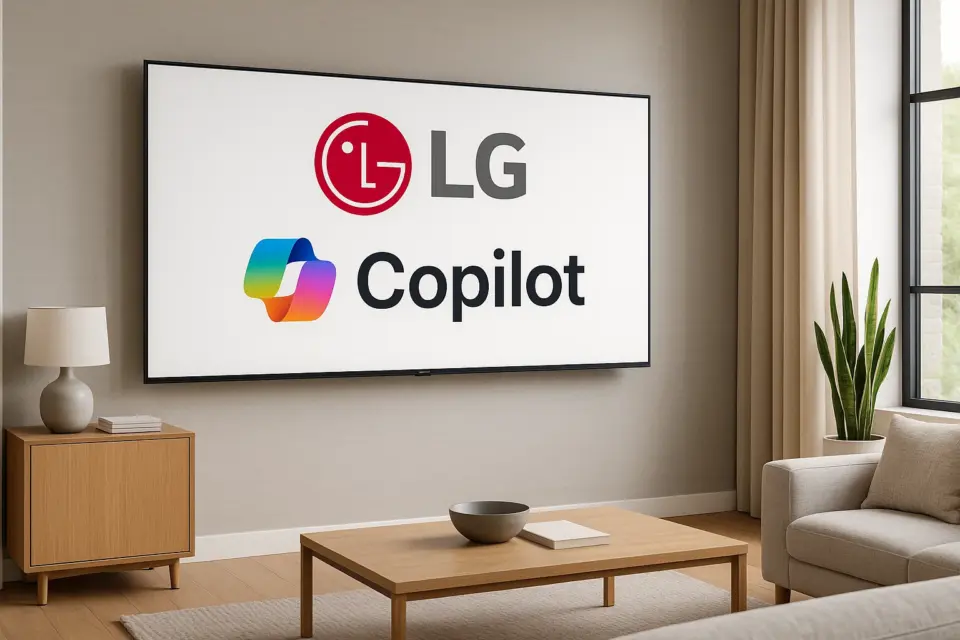
LG plans to further integrate Artificial Intelligence into its smart TVs. Part of this strategy is Microsoft’s AI service Copilot. What was announced as a feature for new devices is now causing frustration among owners of existing TVs. Copilot is apparently appearing via software updates – without clear prior notice and without an easy way to get rid of the feature.
LG has officially confirmed that upcoming generations of smart TVs will gain access to Microsoft Copilot. The announcement was part of the presentations surrounding LG’s 2025 TV lineups in April 2025. These include in particular new OLED evo models as well as QNED evo TVs running webOS 25. However, in the latest press release dated December 12 regarding the current webOS update, LG does not mention the use of Copilot.
Since mid-December 2025, however, users and several technology media outlets have reported that on already sold LG televisions, a Copilot entry suddenly appears after a regular webOS update. In these cases, it is not a voluntarily installable app, but a preinstalled system component that cannot be easily removed.
What LG says Copilot is supposed to do
LG does not describe Copilot as a replacement for the traditional remote control or as a new voice assistant for switching channels. Instead, Copilot is intended to enhance the AI-powered search within webOS. This includes better understanding of more complex search queries, the summarization and structuring of information, and generally more “context-aware” interaction with the TV. Technically, Copilot is based on a Large Language Model (LLM), meaning an AI system capable of analyzing and generating text. In practice, however, the current implementation feels more like access to a web-based Copilot interface than a deeply integrated system feature. The immediate added value in the living room therefore remains questionable.
Which model ranges are affected?
Officially confirmed is Copilot for new devices:
- LG OLED evo TVs of the 2025 generation,
- LG QNED evo TVs with webOS 25, including models such as QNED9M, QNED85, and QNED92.
The situation is unclear when it comes to existing devices. Reports about Copilot tiles appearing automatically only refer to “some models” or “certain LG TVs.” LG has so far not published a verified, complete list of affected models. As a result, it remains unclear which series, production years, or regions are actually impacted. For users, this means that whether Copilot appears on their own TV may only become clear with the next update.
Can users disable or remove Copilot?
This is the core issue that many users dislike: Copilot cannot be uninstalled when it is rolled out as a system app. It does not appear like a regular app with a trash-bin icon, but as a fixed part of the interface. At best, the entry can be hidden or ignored. A true deactivation option is not documented. LG’s webOS logic is not new in this respect: preinstalled system apps have never been removable. What is new, however, is that this is a cloud-based AI service from a third party, not a simple streaming app. As a radical option, users can only operate their TV largely offline, which significantly limits many smart TV functions overall. Alternatively, strict filtering rules using a filter tool installed in the local network, such as AdGuard or Pi-hole running on a Raspberry Pi or a local NAS, would also be an option. However, this is again something only suitable for more experienced users.
Why Copilot on TV is more than just another app
This case is emblematic of a fundamental problem with modern smart TVs. Manufacturers reserve the right to roll out new features, services, and interface changes after the purchase. What used to be a static device has become a permanently changing platform. With Copilot, this debate shifts to a new level, because it is no longer just about advertising or streaming apps, but about artificial intelligence, cloud connectivity, and potential data processing. The fact that such a feature cannot simply be deselected undermines trust. Especially at a time of growing sensitivity around data protection, profiling, and digital sovereignty, a “non-removable AI service” on a TV feels like a step in the wrong direction.
Conclusion
LG may be pursuing technological ambitions with Copilot. However, the way it is being introduced is causing justified frustration. Anyone buying a TV expects new features – but not to have a mandatory AI platform imposed retroactively, with unclear benefits and limited user control. For LG, Copilot is a feature. For many users, it feels more like a loss of control.
Summary (tl;dr)
- LG has officially announced Copilot for its 2025 TV generation.
- Since December 2025, Copilot has appeared via updates on some existing devices.
- The service is intended to enhance AI search, not primarily TV control.
- A clear list of affected existing models is still missing.
- Copilot cannot be uninstalled, only hidden or ignored.
User Review
( votes)
You may also like