Vorwerk explains Neato cloud shutdown: why your smart vacuum just got dumb
 Dennis Knake
Posted On 8th January 2026
Dennis Knake
Posted On 8th January 2026
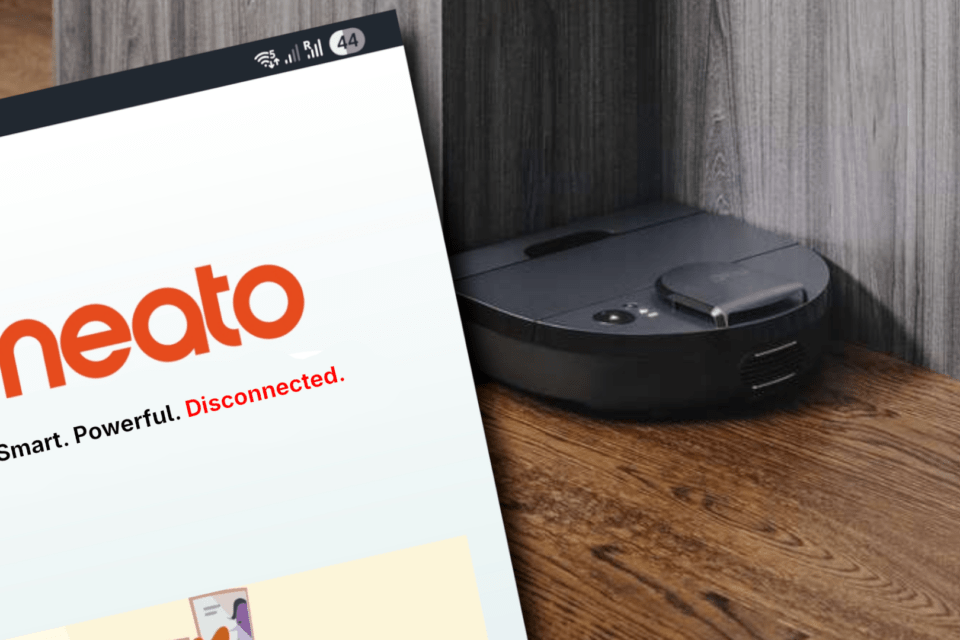
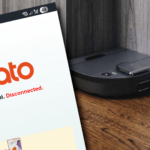
Many Neato customers were taken aback when, by December at the latest, the control app for the smart vacuum cleaner displayed a message saying that the servers used to control the devices had now been shut down and that, from now on, the devices would only work via the button on the robot itself. No scheduling, no targeted room cleaning, no no-go lines.
Anyone who still wants to use their device now has to clear away troublesome obstacles – such as cables or other objects that the robots struggle with – and close the doors to rooms that are not supposed to be cleaned. As a result, a targeted cleaning run now takes significantly longer, because the robot will basically always clean all accessible areas.
It was only around five years ago that the last Neato models D8, D9 and D10 were presented at IFA 2020 – with prices of up to almost 900 euros. These devices were anything but cheap. Quality has its price. For customers, five years is a short lifespan for such a product – after all, this is not a smartphone. For manufacturers whose products are closely tied to IT services, however, five years is an eternity.
On the Neato Robotics website, the company states, among other things: “Since 2023, cybersecurity standards, compliance obligations, and regulatory frameworks have advanced significantly. Under these new conditions, the existing cloud infrastructure can no longer be maintained in a reliable and future-proof way. Updating this environment would not be technically meaningful, nor would it ensure the level of quality and sustainability our customers can expect.”
Neato cloud offline: When “smart” suddenly disappears
The shutdown of the Neato cloud is a textbook example of how connected devices without local fallbacks lose massive value overnight. Anyone who owns a connected Neato vacuum loses all the key functions that originally made the product useful once the cloud is switched off. App control, map management, schedules – all of this is no longer usable without the cloud. What remains is an expensive vacuum cleaner with autopilot but without the “smart”.
Neato now belongs to Vorwerk. With its Kobold product line (including the VR300), Vorwerk operates its own ecosystem for robotic vacuums – including cloud, app, and firmware updates. In theory, it would therefore be obvious to migrate the old Neato devices into the Kobold cloud via a firmware update instead of letting them bleed out functionally.
In practice, things look different. And this is where it gets interesting: community analyses show that Kobold and Neato firmware are astonishingly similar – in some cases right down to identical files.
Updating this environment would not be technically meaningful, nor would it ensure the level of quality and sustainability our customers can expect. — Neato Robotics homepage
Community hacks: Kobold firmware on Neato hardware
Within the Neato community, a thread on Reddit has been attracting attention for quite some time. Under the title “Vorwerk VR300 Firmware on Neato D3, D4, D5, D6 & D7”, users document how the firmware of the Vorwerk Kobold VR300 can be flashed via USB onto various Neato models of the D series.
According to the reports, the update works technically much like a regular Neato firmware update: download the firmware file, copy it to a USB stick, connect it to the robot, and start the familiar update process. Some users report that the firmware does indeed install, but that the robot still plays the typical Neato sounds afterwards and behaves only marginally differently in practice.
At the same time, it becomes clear that the limitations of this approach do not lie in the flashing process itself, but in the cloud integration. Even with Kobold firmware installed, the robot is not readily recognized as a “genuine” Kobold device in the MyKobold app. The technical similarity seems sufficient for the system to boot, but not for clean integration into the official Vorwerk ecosystem.
Firmware dissection: “Neato” inside the Kobold files
The close relationship on the firmware side becomes even clearer in a thread on the RobotReviews forum. Under the title “VR300 firmware download… Neato..”, users analyze an official firmware package for the Vorwerk Kobold VR300. When unpacking, several details stand out:
- The archive contains a file named “Neato_4.5.x_xxx.bin” – including signature and certificate.
- In the first line of clear text, models such as D3, D4, D5, D6, D7 and VR220 are explicitly mentioned – the VR300 is not mentioned separately at all.
- The firmware is provided as a signed and encrypted image, along with a signature file and a certificate.
The conclusion drawn in the forum: with the VR300 firmware, Vorwerk is essentially delivering a Neato firmware package that has been wrapped in its own shell. The shared code base is hard to overlook.
In parallel, a GitHub repository by Robert Sundling titled “Neato Botvac D3, D3 Pro, D4, D5, and D7 firmware” documents various firmware versions of the Neato D series – including notes on certificate lifetimes and update processes. Anyone comparing the file structures will find the same patterns as in the VR300 files.
Scientific confirmation: “Vacuums in the Cloud”
The cleanest and most independent analysis comes from cybersecurity research. Fabian Ullrich and his colleagues presented the paper “Vacuums in the Cloud: Analyzing Security in a Hardened IoT Ecosystem” at the USENIX WOOT conference back in 2019. The study focused on exactly two systems:
- Neato BotVac Connected
- Vorwerk Kobold VR300
They showed, among other things:
- Both robots are based on the same SoC family (TI AM335x in a custom package) and use the same operating system (QNX).
- The boot chain with encrypted, signed firmware images is practically identical in both devices.
- A hidden boot menu entry can be used to load a QNX image via XModem – an approach the authors used to bypass secure boot, extract the firmware and analyze it.
- The cloud integration also follows the same principles: device certificates, encrypted communication and central back-end endpoints for commands and map management.
This paper confirms at an academic level what community hackers have observed empirically: Kobold VR300 and Neato Botvacs are not just “related”, they effectively share a common firmware and security architecture.
API convergence: integrations treat Kobold like Neato
Beyond firmware and hardware, integrations into smart home platforms also reveal the close relationship. In various projects, Vorwerk Kobold robots are treated more or less as special cases of Neato integrations:
- Homebridge plug-ins such as “homebridge-vorwerk” are derived directly from “homebridge-neato” and use identical or very similar API calls for authentication and control.
- In forums around openHAB and other IoT platforms, it is repeatedly discussed that Vorwerk support should not be built as a completely new binding, but that existing Neato bindings should be extended – because the cloud endpoints and data structures overlap so strongly.
- In the German-language Roboter-Forum, this technical proximity is also highlighted in the context of the Neato cloud shutdown.
Taken together, a consistent picture emerges: from the SoC to the operating system and all the way to the cloud API, Neato and Kobold are largely built on the same foundation.
Public pressure: petition calls for preservation of the Neato cloud
This technical proximity has not gone unnoticed by users. An online petition titled “Vorwerk need to stop destroying working hardware! Keep Neato Robotics cloud alive!” explicitly argues using the shared firmware heritage.
Among other things, it cites a user who claims to have successfully installed Kobold firmware on a Neato Botvac – and from this concludes that Vorwerk could theoretically connect Neato devices to its own Kobold cloud without major issues. Instead, fully functional devices are being artificially devalued in order to sell new hardware.
Why is there no official migration path? This is what Vorwerk says about its relationship with Neato
From a technical standpoint, the question is obvious: if the firmware, hardware and cloud stack of Neato and Kobold are so closely related, why does Vorwerk not offer an official migration path for existing customers?
At the end of November 2025, I sent Vorwerk a brief set of questions asking for clarification. It took a little while, but at the beginning of January the company responded. The questions and answers from Vorwerk’s press office are reproduced here in full:
Does Vorwerk share the view that Neato Botvac models (e.g. D3–D7) and Kobold models (in particular VR300) are based on a common platform in terms of hardware and firmware, or are at least technically very closely related?
Vorwerk and Neato have, in the past, jointly developed individual platform components while pursuing different objectives in each case. There are therefore understandable technical similarities – particularly in certain hardware components. At the same time, the concrete implementation differs in essential respects: with regard to European data protection standards, Vorwerk has implemented data protection requirements in the firmware, cloud and app more comprehensively than in the American Neato product portfolio.
For what reasons does Vorwerk not offer an official migration path that would allow existing Neato customers to move their devices into the Kobold cloud (for example via a firmware update)?
Vorwerk and Neato are legally separate companies with their own intellectual property, separate system landscapes and different service and security architectures.
An official migration path would raise complex questions of warranty, support, data processing and functional parity. Since Neato Robotics ceased business operations in 2023, continued operation would result in disproportionate risks and costs without being able to ensure the desired customer benefit on a permanent basis.
Is it correct that any integration – insofar as it has been examined at all – fails primarily due to the authentication and certificate model of the Kobold cloud, and less due to differences in the actual device firmware? If not, where do you see the key technical differences or obstacles?
The differences are holistic in nature. While there are shared components and a certain technical relatedness in the firmware base, the concrete implementation, security architecture and data protection mechanisms differ significantly. In addition, hardware differences result in considerable integration hurdles. Taken together, this leads to a disproportionate effort for a migration, which would not reflect the quality, security and user expectations that Vorwerk places on its products.
From Vorwerk’s perspective, would it be an option to at least support the community to the extent of providing technical documentation, protocol specifications or test endpoints so that an unofficial, community-driven update becomes possible (for example under a disclaimer of liability)?
We appreciate the commitment of tech-savvy communities and the innovative power that emerges from it. At the same time, we bear responsibility for the security, data protection and reliability of our systems – and this is precisely where we set our standards high. Against this backdrop, opening documentation, protocols or test endpoints for unofficial integrations is currently not envisaged. Our focus is on providing Vorwerk customers with a consistent, secure and long-term supported ecosystem.
Beyond the measures already announced, is Vorwerk planning alternative solutions for existing customers (e.g. local operation without the cloud, opening APIs, extending the lifetime of existing cloud services, etc.)?
Vorwerk continuously evaluates options that combine customer needs with high quality, security and future viability. Opening the software or providing an external development environment involves technical and legal risks that are not compatible with our responsible approach to data and systems. In addition, current data protection and compliance standards require a particularly high level of control over data flows and software components.
In plain language, this means: yes, there is a relationship. No, we are not doing anything. No, we are not helping the community. And no, we are not opening anything up. Vorwerk justifies all of this with “security”, “data protection” and “compliance”, while providing very little detail.
Early DIY solutions show promise – but are not for beginners yet
So what does this mean for the many Neato owners and the wider community? Hope dies last. There is still hope that ingenious tinkerers will soon manage to “crack” the Neato system and develop their own app control. Based on these answers, however, Neato owners are unlikely to be able to count on help from Vorwerk any time soon.
There has already been a first success, but it requires more than a simple firmware update: you open the Neato, attach an ESP32 board (e.g. ESP32-C3 supermini) to the internal USB/serial port and use the “neato-connected” GitHub project, which exposes the robot’s serial interface locally to Home Assistant. To do this, you need an ESP32, some soldering on the Botvac’s RX/TX pads, an appropriate power supply from the device itself, and the setup of the neato-connected integration in Home Assistant.
Has Vorwerk squandered trust by shutting down Neato?
The Vorwerk brand undoubtedly stands for quality. These are not cheap devices – they are built to last. At least that is the image of the premium brand that also achieved worldwide success with the Thermomix. Vorwerk has been selling the original “Kobold” vacuum cleaner almost exclusively through direct sales since the early 1930s. Sales representatives came into people’s living rooms, demonstrated what the vacuum could do on the customer’s own carpet, and closed the sale on the spot. The vacuum cleaner was a premium product that needed explanation, not something that should simply sit anonymously on a shelf, but instead be sold with demonstrations, advice, installment plans and later regular service visits.
Neato, however, was not Vorwerk – at least not until 2017. That year, Vorwerk took over the American manufacturer and, based on the Neato robots, developed its smart Kobold line. The D6 and D7 were introduced in 2017. By the time the D8, D9 and D10 models were launched, most customers were aware of the parent company, and anyone buying Neato also believed in the Vorwerk promise.
Customers who have no interest in tinkering or waiting and who would rather look for a new vacuum cleaner now will very likely steer clear of Vorwerk for the time being. That may seem unfair, since other manufacturers also tie their devices to their own cloud solutions. However, there are now projects such as “Valetudo”, which offer independent app control for a range of alternative manufacturers, including devices from Roborock, Dreame and Midea. Neato or Vorwerk devices are more complex and are not (yet) part of that ecosystem. But who wants to buy a new device now only to face the same problem again in five years? Better to choose a device that can be operated independently if the worst comes to the worst.
Customer frustration over cloud shutdowns
This makes it all the more important that manufacturers stop thinking strictly in terms of siloed solutions when developing smart products. Of course, the cloud is a great way to generate additional revenue – especially if you can offer an entire ecosystem of smart solutions. Cheaper products are often refinanced through ongoing subscriptions. With high-priced devices, however, it is difficult to explain to customers why they should be looking for a new device after just a few years. Vorwerk’s flagship Kobold VR7, for example, costs around 1,000 euros. Who can guarantee that I will still enjoy using it in 2030? While a short lifecycle might still be tolerated for smartphones, this attitude hits a hard limit with household appliances such as washing machines, refrigerators or, indeed… vacuum cleaners.
Especially when the device itself is not actually broken.
User Review
( votes)