When Hardware Dies Because the Server Says So: The Kindle as a Symptom of an IoT Problem
 Dennis Knake
Posted On 10th April 2026
Dennis Knake
Posted On 10th April 2026
Amazon is discontinuing support for older Kindle models as of May 20, 2026. Fully functional devices are being permanently restricted by a software decision. This is not a Kindle problem. This is an IoT problem.
- Amazon is ending Kindle Store access for models made in 2012 or earlier as of May 20, 2026: affected devices include Kindle 1–5, Kindle Touch, Kindle Keyboard, and the first Kindle Paperwhite – devices that still work perfectly but will become permanently unusable after a factory reset.
- The Kindle case illustrates a structural problem with connected hardware: once a device depends on manufacturer backend services, it is no longer the user who decides how long it lasts – it is the vendor.
- The EU Right to Repair Directive (2024/1799) addresses physical repairability but does not include any minimum lifespan requirement for digital services – a gap that is relevant across the entire IoT industry.
What exactly happens on May 20
Olav A. Waschkies, Managing Director at Whitehall Reply, took to LinkedIn to vent his frustration: his Kindle from 2014, technically flawless, is being restricted by a software decision. The response to his post was huge – recommendations to switch to Tolino (the competing platform run by a German bookseller alliance including Thalia, Hugendubel, and other partners), tips on Calibre (a free, open-source tool for managing and converting e-books), and fundamental debates about digital ownership.
Waschkies is far from alone: Amazon has confirmed via email and its support pages that all Kindle devices made in 2012 or earlier – including Kindle 1st through 5th generation, Kindle Touch, Kindle Keyboard, Kindle DX, and the first Kindle Paperwhite – will lose access to the Kindle Store as of May 20, 2026. Buying, borrowing, or downloading new books will no longer be possible. Titles already stored locally remain readable, as long as the device stays registered.
The critical catch: anyone who deregisters or resets their device after that date will not be able to register it again – rendering it permanently unusable. Amazon spokesperson Jesse Carr told Dataconomy this was due to technological progress; the affected models had been supported for 14 to 18 years. As compensation, Amazon is offering a 20 percent discount on new devices, valid until June 20, 2026. Industry analyses put the total number of Kindle units ever sold at over 72 million – how many of those belong to the now-discontinued early generations has never been disclosed by Amazon.
DRM: Why the device was never really yours
At the heart of the problem is DRM – Digital Rights Management, meaning technical measures that tie digital content to specific platforms or devices. When you buy an e-book from Amazon, you are not acquiring ownership of a file – you are buying a usage licence tied to the Amazon ecosystem. The lock-in is not a side effect; it is the business model. As long as Amazon keeps its servers running, the system works. When it does not, the book you purchased effectively ceases to exist – at least on the device in your hands.
Open alternatives do exist: the ePub format, natively supported by Tolino, Kobo, and the open-source program Calibre, allows platform-independent use – regardless of whether the original vendor still exists.
What are the alternatives?
Anyone looking to switch to a more open ecosystem after the Kindle support cutoff has several options, depending on reading habits and geographic reach.
In the German market, Tolino is the most obvious alternative. The platform was founded in 2013 as a counterweight to Amazon’s dominance: behind the brand is an alliance of major German booksellers including Thalia, Hugendubel, Osiander, and the distributor Libri, with over 1,800 affiliated bookshops. According to the Tolino alliance, more than five million devices have been sold to date; its share of the German e-book market stands at around 40 percent. The key feature from a digital sovereignty perspective: Tolino devices support the open ePub format natively. Purchased books can be read on any ePub-compatible device – regardless of whether the Tolino platform itself continues to exist. Technically, Tolino is built on a partnership with the Canadian company Rakuten Kobo.
Kobo itself is the strongest international alternative – available in over 190 countries with a broad range of devices from entry-level to premium models with colour displays and stylus input. Kobo natively supports ePub, allows users to load their own files via USB, and in many countries offers direct access to public library lending via OverDrive/Libby – something Kindle devices in Germany largely lack. Kobo devices are also among the few e-readers for which the manufacturer officially provides spare parts and repair guides via iFixit.
For more technically minded users, PocketBook (a European manufacturer from Switzerland/Ukraine) is another option: broad format support, no mandatory manufacturer account, and devices that function fully without any cloud connection.
Anyone who has already built up a Kindle library does not necessarily have to abandon it. Amazon’s desktop and smartphone apps for Windows, macOS, iOS, and Android remain fully available. Since December 2025, Amazon has also been allowing publishers and authors to offer books in the Kindle Store as DRM-free ePub – a small but noteworthy step towards openness. Which titles are available in this format, however, is entirely up to the individual publisher.
The library management program Calibre – free, open source, available for Windows, macOS, and Linux – is a useful addition to any of these ecosystems: it manages e-book collections across devices, converts between formats, and transfers files to almost any reader. It does not replace a bookshop, but it provides the technical foundation for breaking free from proprietary ecosystems.
This is not an isolated case: Revolv and the logic of “bricking”
Anyone who thinks this is an e-reader problem should cast their mind back to May 2016. That month, Nest – a Google subsidiary – deactivated all smart home hubs made by Revolv. The devices had cost $300 and were sold with an explicit “Lifetime Subscription”. From May 15, 2016, they stopped working – completely, irrevocably, remotely. The term “bricking” – turning a functioning device into a useless object – has been part of the IoT debate ever since.
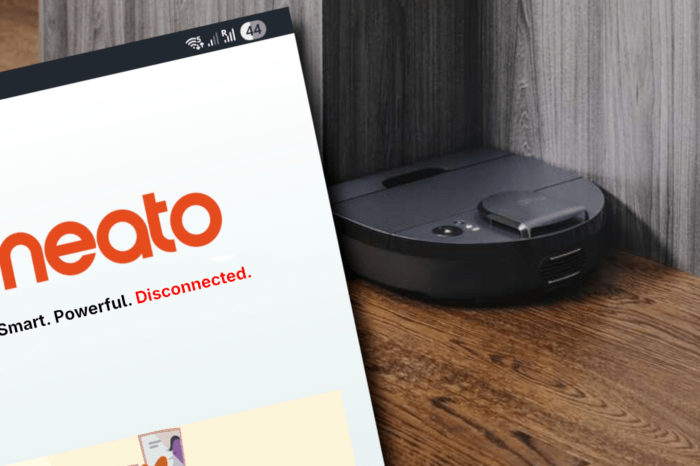
WeSpeakIoT has documented this pattern across several recent cases. In October 2025, Vorwerk pulled the plug on all robotic vacuum cleaners from the acquired brand Neato: the devices lost their intelligence – no scheduling, no room mapping, no app control. In our article “Stop Buying Cloud Products”, we also compiled the long list of other cloud shutdowns: Amazon Echo Connect, Amazon Cloud Cam, Deutsche Telekom’s smart speakers, Insteon – devices that became electronic waste overnight because running the servers was no longer profitable for the manufacturer. And as recently as February 2026, Bose followed suit with the end of its SoundTouch range – as we analysed in our article “Those Who Trusted the Cloud Are Left Behind”.
The Kindle case is less radical, but the principle is identical: connected hardware has no autonomous operation. Its core function depends on a server that can be switched off.
What EU law does – and does not – cover
The Right to Repair Directive (EU 2024/1799), in force since July 2024 and to be transposed into national law by July 2026, obliges manufacturers to repair certain product categories beyond the warranty period and to keep spare parts available. E-readers do not fall explicitly within its scope.
More significant is a different gap: the directive governs physical repairability, not the question of how long a manufacturer must keep backend services running. Manufacturers are already required to state how long software updates will be provided for digital products – but EU law does not prescribe any minimum period. The new EU Product Liability Directive (2024/2853), in force since December 2024, extends the definition of “product” to include software – but it would not resolve the Kindle situation today.
What this means for the IoT industry
The Kindle example is so telling precisely because it is not an exception – it is the norm. Every connected sensor, every smart light, every industrial IoT gateway operates on the same principle: without the backend, the hardware is worthless. Anyone developing or procuring IoT products should ask three questions: How long does the manufacturer commit to operating the necessary services? What happens to devices and data when support ends? And are there open standards or local operating modes that allow continued use without the manufacturer?
The EU Right to Repair Directive was a step in the right direction. The next step would be a right to continued operation – an obligation to either keep supporting connected hardware after end-of-service, or at minimum to provide a local operating option.
Until then, one thing holds: in IoT, buying does not mean owning.

You may also like