More Than a Moon Mission: How Artemis II Becomes a Flying Test Platform for Sensor Technology
 Dennis Knake
Posted On 2nd April 2026
Dennis Knake
Posted On 2nd April 2026
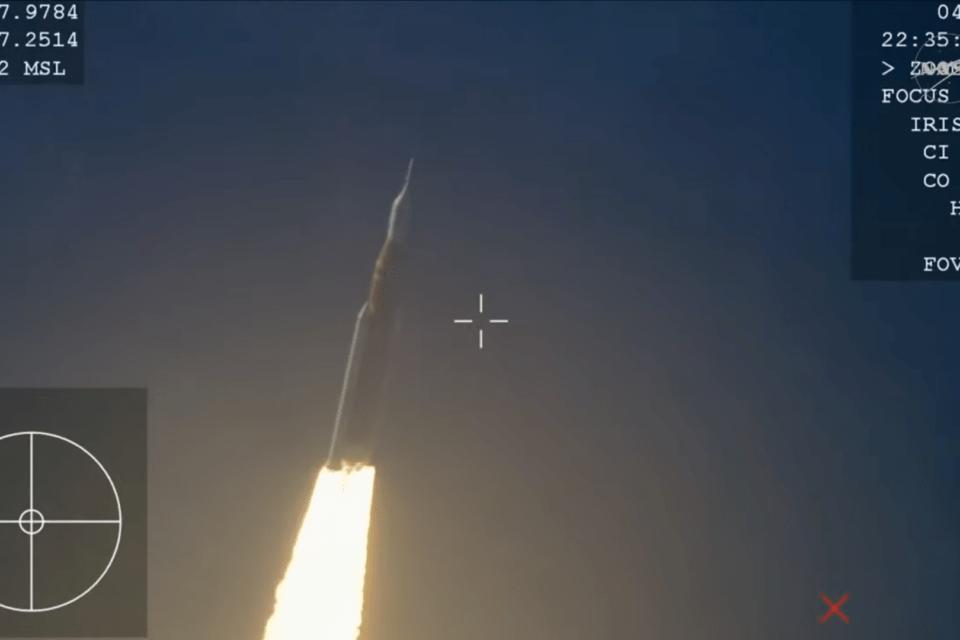
Artemis II has launched – the first crewed Moon mission in over 50 years is underway. But the four astronauts on board are not alone: European technology is flying with them, pushing boundaries and delivering data that will be relevant far beyond spaceflight.
Key Takeaways
- The European Service Module (ESM), built under the industrial leadership of Airbus in Bremen, is carrying humans into deep space with European propulsion technology for the first time.
- The CubeSat TACHELES from Berlin-based startup Neurospace is set to be released into high Earth orbit around five hours after launch, where it will test rover electronics under real radiation conditions.
- Four DLR radiation detectors and NASA wearable wristbands will accompany the crew all the way to the Moon and back – delivering datasets relevant to both future long-duration missions and terrestrial IoT applications.
Europe at the Controls: The Service Module from Bremen
Anyone who thinks of Artemis II as a purely American mission to bring humans back to the Moon is missing the bigger picture. The heart of the Orion capsule – the so-called European Service Module (ESM), the propulsion and supply unit providing fuel, electricity, water, and oxygen for the crew – was developed and assembled on behalf of the European Space Agency ESA under the industrial leadership of Airbus Defence and Space in Bremen. Components from eleven European countries as well as the United States flow into the system. For NASA, it is the first time it has relied on a non-American core component for a safety-critical crewed mission.
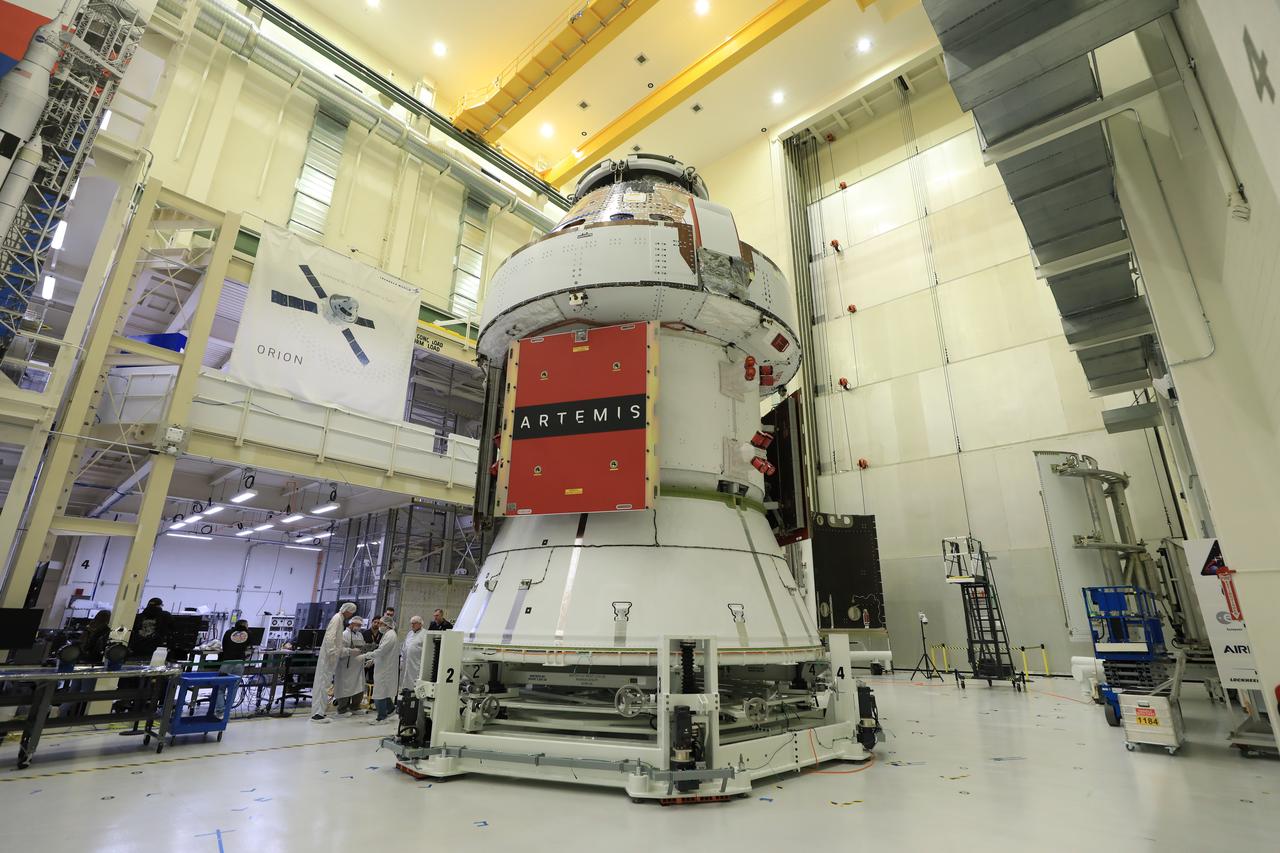
Technicians install the solar panels on the ESA ESM service module. On top sits the Orion capsule of the Artemis II mission. Image: NASA/Kim L. Shiflett
The ESM powers the Orion capsule via four solar wings and controls temperature and life support on board. For Artemis II, it is the first deployment with a human crew – a vote of confidence in European space technology with significant implications for future missions to the Moon and Mars.
TACHELES: Berlin Startup Sends Rover Electronics into the Radiation Belt
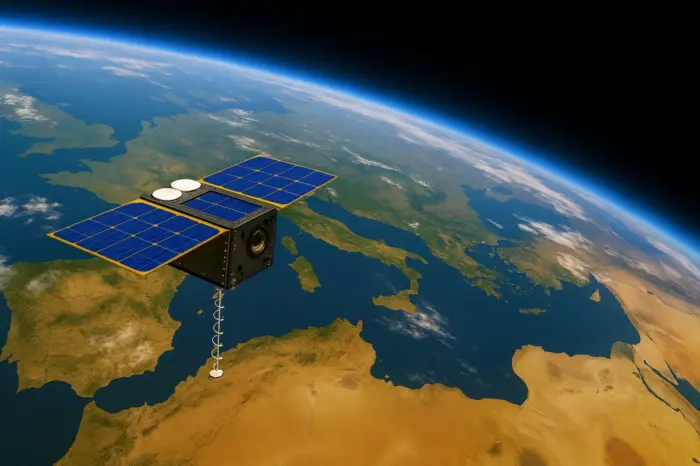
Around five hours after launch, a small German satellite is set to be on its own. TACHELES – a so-called 12U CubeSat, a cube-shaped miniature satellite measuring approximately 10 × 10 × 30 centimetres – is to be released from the rocket stage adapter while Orion is already flying independently in high Earth orbit. It was developed by Berlin-based startup Neurospace, selected and co-funded by the German Space Agency.
TACHELES will not fly to the Moon. Its destination is a highly elliptical Earth orbit with an apogee – the highest point of the orbit – of around 77,700 kilometres, deep within the outer Van Allen belt. This radiation belt, a zone of high-energy particles trapped by Earth’s magnetic field, is considered particularly critical for electronics. That is precisely where TACHELES will test its payload: microcontrollers – programmable control chips – of the kind intended for use in the company’s planned lunar rover, the “HiveR”.
The IoT relevance is direct: the same embedded processors that are ubiquitous in connected devices on Earth must function reliably in space under extreme radiation. TACHELES carries the rover electronics on three separate circuit boards, complemented by a shielded reference board and dedicated radiation sensors. This setup will allow fault behaviour and component degradation to be directly compared. According to Neurospace, the mission is expected to last up to two and a half years, provided a targeted orbit-raising manoeuvre succeeds after deployment.
DLR Dosimeters M-42 EXT: Radiation Measurement on the Way to the Moon
While TACHELES will be operating independently early on, the experiments of the German Aerospace Center (DLR) are set to remain on board for the entire ten days of the mission. Four radiation detectors of type M-42 EXT – dosimeters, meaning instruments that measure accumulated radiation dose – are to be mounted and activated by the crew inside the Orion capsule shortly after launch. They were stowed in a cargo transfer bag at the time of launch, allowing greater flexibility in mission operations.
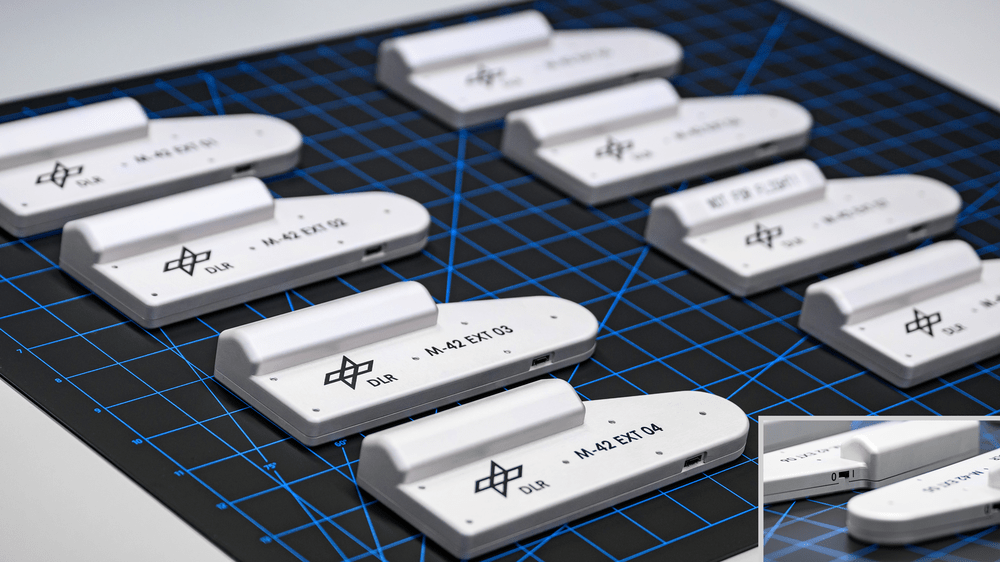
DLR radiation detectors M-42 EXT will be installed at various points inside the Orion capsule. Image: DLR (CC BY-NC-ND 3.0)
The devices are a further development of the sensors that flew on Artemis I. At that time, the DLR experiment MARE produced the first continuous radiation dataset for the entire route between Earth and the Moon. Artemis II continues this measurement series – with improved electronics, an on/off switch, and an optimised battery.
The DLR dosimeters are complemented by six additional active radiation sensors permanently installed inside the Orion capsule by NASA. Together, they form a distributed sensor network – a concept immediately familiar to IoT developers: decentralised nodes, continuous measurement, real-time data transmission to the ground station.
ARCHeR: Wearables Measure Sleep, Stress, and Cognition in Deep Space
The fourth technology layer on board is the closest to the human element: as part of the NASA study ARCHeR, all four crew members will wear wearable wristbands continuously collecting physiological and behavioural data: sleep patterns, stress indicators, cognitive performance, and team dynamics.
ARCHeR has been running since 2018 on the International Space Station. Artemis II marks the first time this wearable-based health monitoring has been deployed beyond Earth’s protective magnetic field – in an environment where radiation exposure, isolation, and psychological stress are significantly more intense than in low Earth orbit. The data gathered is intended to help develop protocols and countermeasures for future long-duration missions to the Moon and Mars.
ARCHeR is therefore a real-world test under extreme conditions: can wearable sensors, as used today in industrial health monitoring or consumer applications, measure and transmit data reliably even under intense cosmic radiation and in complete isolation?
What Deep Space and IoT Have in Common
The experiments on board Artemis II follow a common pattern familiar to IoT developers: distributed, miniaturised sensors capture environmental and status data, transmit it to a remote evaluation unit, and provide the basis for decisions – whether by Mission Control in Houston or by an algorithm on an industrial computer.
The difference lies in the scale of the challenge. Greater latencies in data transmission, cosmic radiation flipping bits in memory cells, and no technician available to replace a failed sensor: these are the conditions under which robust IoT architecture must prove its worth.
The insights will flow back. Radiation-resistant microcontrollers, more reliable wearable sensors, more autonomous embedded systems – what works in the Van Allen belt or on the way to the Moon sets standards for demanding terrestrial applications: in industry, in medicine, in remote infrastructure.
Artemis II is therefore more than a milestone in human spaceflight. The four astronauts will be underway for around ten days: after launch, the Orion capsule is set to pass the Moon on a so-called free-return trajectory – a flight path on which lunar gravity automatically guides the spacecraft back to Earth – at a distance of up to 9,700 kilometres, before the crew is expected to splash down in the Pacific on around 10 April. It is a field test for technologies that are also needed here on Earth.
Those who want to follow the mission over the coming days can do so via the live coverage on NASA TV.