Container Tracking in SAP: Hapag-Lloyd Delivers the Position, the Customer Sets the Rules
 Dennis Knake
Posted On 6th September 2026
Dennis Knake
Posted On 6th September 2026
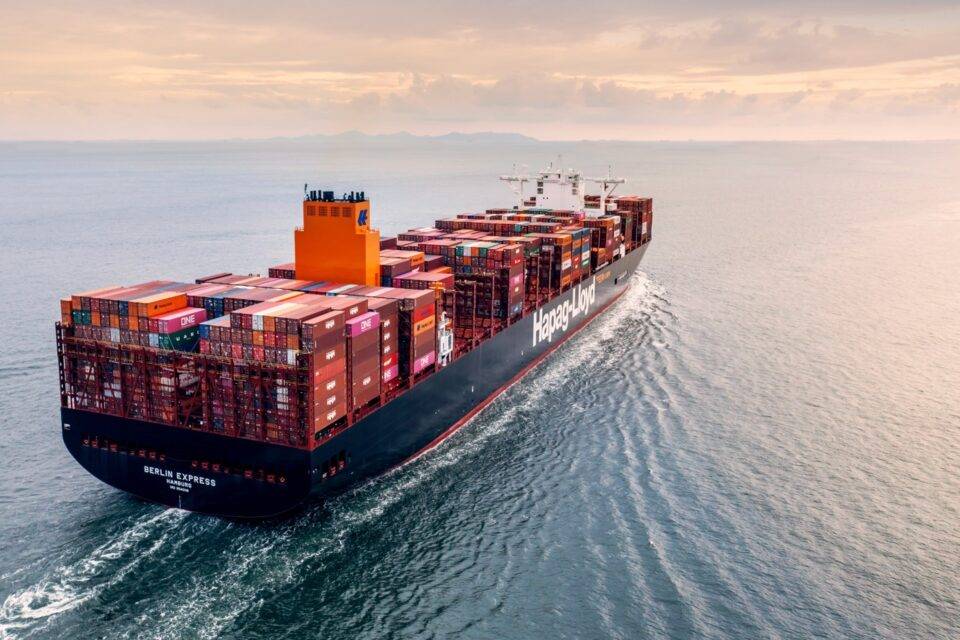
Position data from around two million Hapag-Lloyd containers now flows straight into customers’ SAP systems. There it sits alongside purchase orders and stock levels, ready to feed further planning in logistics and production. What conclusions follow from a current position is something the carrier leaves to the customer.
- Hapag-Lloyd passes the position data from its containers through the SAP Business Network into customers’ S/4HANA systems.
- Besides SAP, the carrier works with CargoWise, Lobster and Cargoo; according to the company, SAP has the more extensive integration.
- Recommended actions, for instance during disruptions, are to be defined individually on the customer side rather than by the carrier.
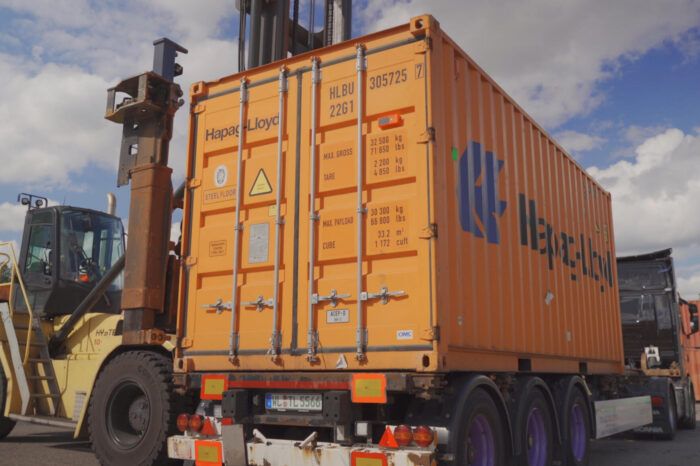
In March we reported how Hapag-Lloyd fitted around two million dry containers with IoT trackers and built the Live Position service on top of them (“I Know Where My Container Is”). Karsten Schmidt announced at the time that the container data would in future also be made available through systems such as SAP. That connection is now live. Schmidt has since taken on the topic as Director Smart Container Commercial.
How does container data reach an SAP system?
Until now, position data reached customers in two ways: through a website, or through an interface customers had to connect themselves. Anyone wanting to plan therefore switched windows or wrote code. Via SAP Business Network Global Track and Trace, the data now lands in the software many shippers already work in. The container appears there next to the purchase order, the delivery note and the stock level. A delay now meets the data it affects. That is the difference. The technology inside the container stayed the same. The path to the customer got shorter.
Who else connects the data?
SAP is not the only partner. According to the company, Hapag-Lloyd also works with CargoWise from WiseTech Global, with Lobster and with Cargoo. The partners differ in depth. “SAP is very active at the moment and has a more extensive integration than CargoWise,” Schmidt says. “Even so, we regard both partners as equal.” For customers, the consequence is this: how much the container data is worth inside their own operation depends less on the carrier than on the software receiving it. Hapag-Lloyd delivers the same positions everywhere. What becomes of them is decided by the integration.
What is behind a position?

Karsten Schmidt, Director Smart Container Commercial, Hapag-Lloyd
The positions in the data stream come from two sources. On land, the trackers inside the containers report every 15 minutes and determine their location via satellite navigation, and reporting it via LTE. At sea, Hapag-Lloyd asks the ship, and position data is transmitted every six hours. The reason is power. “For the sea leg we use the ship data, to spare the trackers’ batteries,” Schmidt adds.
A container often sits on board for weeks. Every report during that time costs energy and delivers nothing, because the carrier knows where the ship is anyway. The same calculation limits the resolution on land: a tracker that is supposed to suddenly report more often than the preset 15 minutes when it leaves a defined area would have to respond to individual commands on a regular basis.
Transmitting takes milliseconds. Receiving requires a window in which the radio module listens for those commands, and that listening drains the battery. This is why customers currently cannot adjust the reporting interval individually while a shipment is under way. Hapag-Lloyd is looking for a way around it. The carrier is working on assigning each device a profile at the start of a journey that adapts its behaviour.
The tracker would then be given its rules in advance instead of receiving them en route. Whether a customer can tell which source lies behind an individual position depends on their own configuration. That comes down to what the customer sets up in their system and which data they consume, Schmidt says. Anyone automating processes should know that setting.
What visibility delivered in the Persian Gulf
How much a position is worth became clear when around 15,000 containers were stuck in the Persian Gulf as a result of the Iran war. Hapag-Lloyd opened Live Position at the time to customers who had never booked the service. The carrier itself could do little. “There was little we could do operationally, since the ships were not allowed to pass,” Schmidt says.
No data point moves a ship through a closed passage. The benefit arose elsewhere. “But customers could see where the containers and their cargo were, and build alternative scenarios on that basis,” Schmidt says. Anyone who knew their goods would arrive weeks later rescheduled, informed their buyers or sourced differently. This is precisely where the argument for the ERP connection lies. Visibility helped those who made something of it. And they made it in their own systems.
Who decides what to do?
That leaves the question that stayed open in March: a container is stuck. Now what? Hapag-Lloyd does not answer it. Recommended actions will take a while yet and depend heavily on the users’ processes, Schmidt says. “It will probably be the case that these are defined individually on the customer side, rather than being prescribed by HLAG.” That sounds cautious, but it follows the matter.
An automotive supplier facing a production line stoppage reacts differently from a furniture retailer. Give both the same recommendation and you serve neither. SAP is filling the gap from the other side. In future, users are to be able to ask the software for alternative courses of action, such as a different mode of transport.
Sven York Pohl, Chief Expert Digital Adoption at SAP, told CIO that the goal is for the AI to suggest concrete options for action. SAP’s AI tool Joule is intended to handle this. The division of labour is therefore set. Hapag-Lloyd delivers positions. The customer formulates the rules. The software in between decides how easy that is. Which makes the depth of the partners’ integration the real lever.
Conclusion
Two million connected containers were the investment. The SAP connection turns them into something the business actually runs on, because the data arrives where shippers already do their planning. Hapag-Lloyd does not take the second step. What follows from a delay is decided by the customer in their own system. The carrier supplies the position. The customer does the analysis.
Hapag-Lloyd passes the position data from its containers through SAP Business Network Global Track and Trace into customers’ S/4HANA systems. There it appears alongside order and delivery data, instead of only being visible on a separate website.
Besides SAP, Hapag-Lloyd names CargoWise from WiseTech Global, Lobster and Cargoo as integration partners. According to the company, SAP currently has the more extensive integration but is not regarded as a preferred partner.
At sea, Hapag-Lloyd uses the ship’s position data rather than the container trackers. This spares the devices’ batteries, which would otherwise send reports for weeks without adding anything of value.
Not yet. A tracker would have to receive data on a regular basis, and that receiving mode consumes considerably more energy than transmitting. Hapag-Lloyd is working on assigning devices a profile at the start of a journey that adapts their behaviour.
Little for the carrier itself, since it cannot move a blocked ship. For shippers, visibility does help, because they can locate their goods and plan alternative transport or sourcing routes on that basis.