Meta’s AI Modes Record Without the LED. Should Germany’s Regulator Reconsider?
 Dennis Knake
Posted On 27th August 2026
Dennis Knake
Posted On 27th August 2026
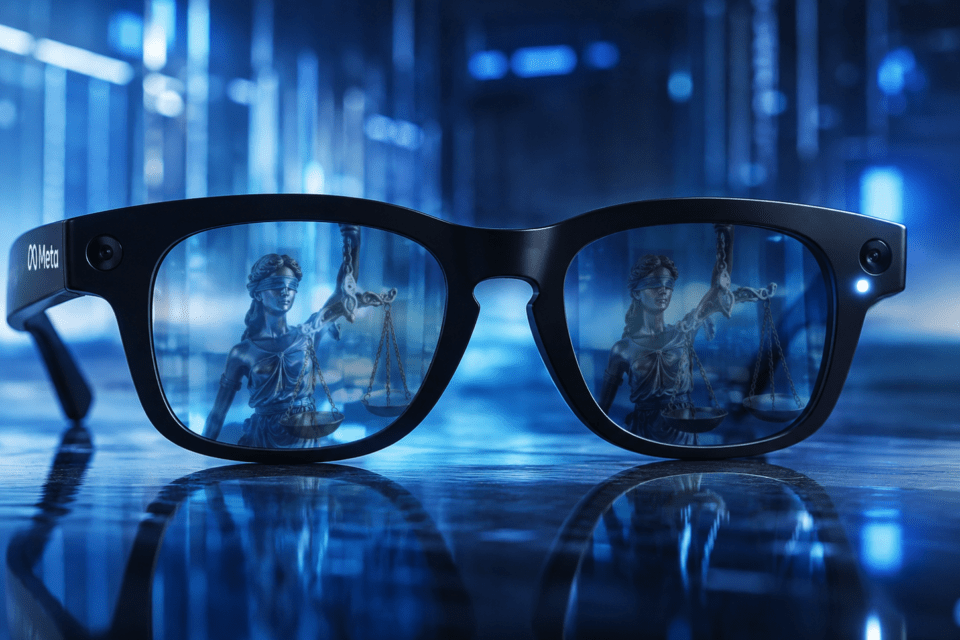
Germany’s Federal Network Agency (Bundesnetzagentur) sees no grounds to ban Meta’s camera glasses because the recording LED warns bystanders. Meta itself writes that under certain conditions this very LED stays off during AI functions. Asked about this, the agency told WeSpeakIoT that it cannot currently communicate an assessment.
- The Bundesnetzagentur considers the capture LED on Meta’s camera glasses a sufficient signal to bystanders and therefore sees no grounds for a ban under Section 8 TDDDG.
- Meta’s policy paper on bystander privacy distinguishes two camera uses: captures for the user’s gallery, where the LED lights up, and AI functions, where it is off.
- Asked by WeSpeakIoT, the Bundesnetzagentur says it has not physically inspected the Ray-Ban Meta Wayfarer Gen 2 and cannot currently communicate an assessment of the AI functions.
Since 12 August 2026, a criminal complaint against Meta, Ray-Ban, Oakley and four German retailers has been on file with the Central Office for Combating Internet Crime in Frankfurt. Since then, civil rights campaigners, regulators and manufacturers have been arguing about a small white light on the front of a spectacle frame.
One question nobody is asking: when does it not light up?
Why does the Bundesnetzagentur see no grounds for a ban?
The human rights organisation HateAid considers the sale of the Ray-Ban Meta Wayfarer (Gen 2) in Germany a criminal offence. It is calling for a sales ban and binding design requirements, such as colour-coded markings on the cameras. The legal basis is Section 8 of the Telecommunications Digital Services Data Protection Act (TDDDG).
The provision bans devices that are disguised as everyday objects and intended to film other people without their noticing. A device counts as intended for that purpose if its recording function is not clearly recognisable to the person affected during normal use. Everything turns on that sentence.
Responsibility lies with the Bundesnetzagentur, Germany’s federal network agency, which may ban such devices without court proceedings. In mid-August a spokesperson told the Frankfurter Allgemeine Zeitung that for the Ray-Ban Meta AI Glasses examined so far, the agency does not consider the conditions for a ban to be met. What matters is whether an uninvolved third party can tell that they are being recorded. No formal proceedings are under way. The entire assessment therefore rests on a single component: the LED.
When does the LED on Meta’s glasses light up, and when does it not?
Meta calls it the capture LED. It sits at the front of the frame, glows white and has no off switch. On the product page for the camera function, Meta describes it as a signal showing that the camera is active. That is the reading the agency relies on. Meta’s own documents are more specific.
The product FAQ of 7 July 2026 ties the signal to one particular purpose: the light blinks whenever content is captured for the user’s gallery. The glasses’ AI functions, which also use the cameras, go unmentioned here. The policy paper Bystander Privacy is clearer. Meta distinguishes two camera uses there.
First, active capture, meaning photos and videos the user can save and share. For these, the LED signal is recognisable.
Second, AI functions, where the camera also captures the surroundings so the assistant can answer questions about them. For this second group of features, Meta describes different safeguards, such as stripping out identifying features, with the LED switched off.
Bystanders therefore cannot tell that they are being recorded. The paper supplies its own reasoning for why the LED does not light up during every camera use: if it blinked too often, people would grow used to it and overlook the signal. The conclusion stands: there are indeed recording functions in which the LED stays off. The difference is that these recordings serve the AI functions and never reach the user’s gallery.
What does the Bundesnetzagentur say about the AI functions?
So far, reporting has only stated that the Bundesnetzagentur considers the illuminated LED sufficient for recording functions. Yet it now appears there are also modes in which the camera records while the LED stays off. So what now?
I asked the Bundesnetzagentur which models it had actually examined, and how it assesses Section 8 in an operating state without an optical signal. Press spokesperson Matthias Podolski answered briefly: “The Bundesnetzagentur has examined various models from the manufacturers Ray-Ban and Oakley that were developed in cooperation with Meta. A physical inspection of the Ray-Ban Meta Wayfarer Gen 2 has not taken place.” And further: “An assessment of the AI functions of the Meta smart glasses against the background of Section 8 TDDDG cannot be communicated at present.”
So the glasses at the centre of the current criminal complaint appear not to have been examined by the Bundesnetzagentur at all?
And the AI functions have been ignored entirely?
I doubt it.
It looks more as though the agency does not yet want to communicate.
What happens to the recordings from AI mode?
One could argue: as long as the user cannot save the AI mode recordings anyway, it is acceptable that no LED warns the people nearby.
The problem: the recordings do not stay with the user, but apparently end up somewhere else entirely.
Back in March 2026 I reported on the findings of Swedish journalists: staff at a contractor in Nairobi review footage from the glasses and use it for AI training, including intimate everyday scenes. Meta’s response to that is the real point. After two months, a spokesperson referred the Swedish newsrooms to the company’s own terms: if Live AI is used, the material is processed under the Meta AI terms of service.
Meta thereby assigns the review by third parties to an AI function itself, the very group for which the company describes safeguards with the LED switched off. Meta also confirms the process to Engadget: if someone shares content with Meta AI, contractors occasionally review that data to improve the product, and the company filters it beforehand to keep identifying information out. Photos and videos for the gallery, by contrast, stay on the device unless the user shares them.
Conclusion
It is therefore reasonable to assume that camera functions do exist in which people nearby are recorded without any way of telling that it is happening.
Where the images end up should not matter for that assessment.
Should the Bundesnetzagentur reconsider its decision? With the Live AI function, a simple ‘as long as the LED shows it, everything is fine’ does not go far enough.
No. Under its current reading of Section 8 TDDDG, the Bundesnetzagentur considers the manufacture, possession and sale of smart glasses lawful as long as the recording function is clearly recognisable to bystanders, for example through an optical signal. The agency has no formal proceedings under way and says it is monitoring the market. Separately, the Central Office for Combating Internet Crime in Frankfurt is examining, following a criminal complaint, whether initial grounds for suspicion exist.
Meta’s statements on this are inconsistent. The product page describes the capture LED as a signal that the camera is active. The product FAQ ties it to captures for the user’s gallery, and the Bystander Privacy policy paper names safeguards for AI functions in which the LED is off. Which individual feature operates in which state is not disclosed by Meta.
That remains open. Asked by WeSpeakIoT, the agency said an assessment of the AI functions of the Meta smart glasses against the background of Section 8 TDDDG could not be communicated at present. It also stated that it had examined various models from Ray-Ban and Oakley, but that a physical inspection of the Ray-Ban Meta Wayfarer Gen 2 had not taken place. Whether an assessment of the AI functions exists cannot be inferred from these statements.
The provision bans telecommunications equipment that is disguised as an everyday object and intended to record a person’s image or sound without their noticing. Equipment counts as intended for that purpose in particular when its recording function is not clearly recognisable to the person affected during normal use. The Bundesnetzagentur is the authority responsible for issuing bans.
Unlike photos and videos for the gallery, captures from AI functions do not remain on the device but are stored by Meta. Meta confirms that contractors occasionally review such data to improve the product, and that the company filters it beforehand. According to research by Swedish newspapers, workers in Nairobi review this material and label it for AI training.