Hannover Messe 2026: The Internet of Things Is Everywhere and Nowhere
 Dirk Roebers
Posted On 25th April 2026
Dirk Roebers
Posted On 25th April 2026
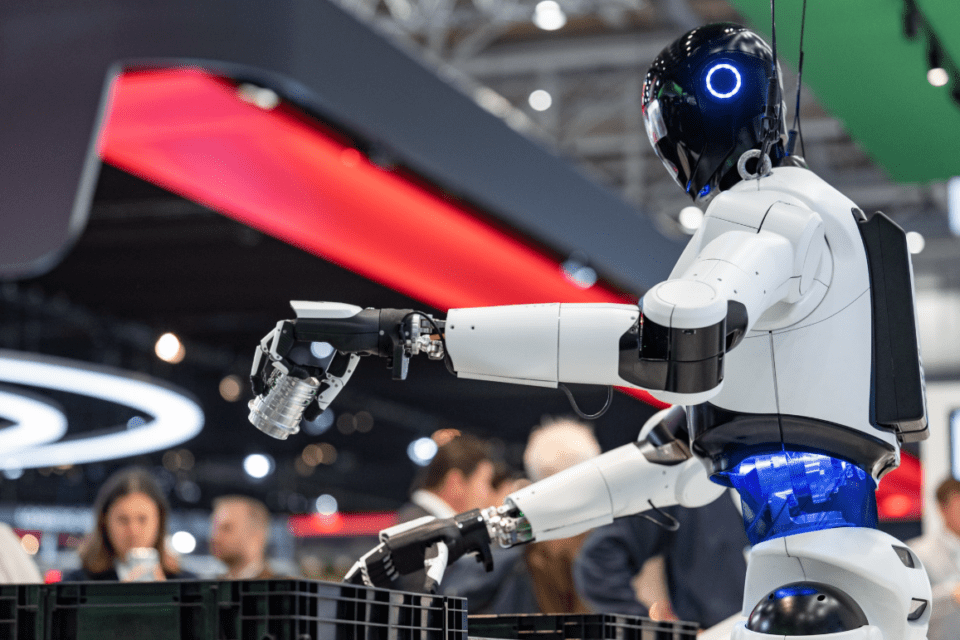
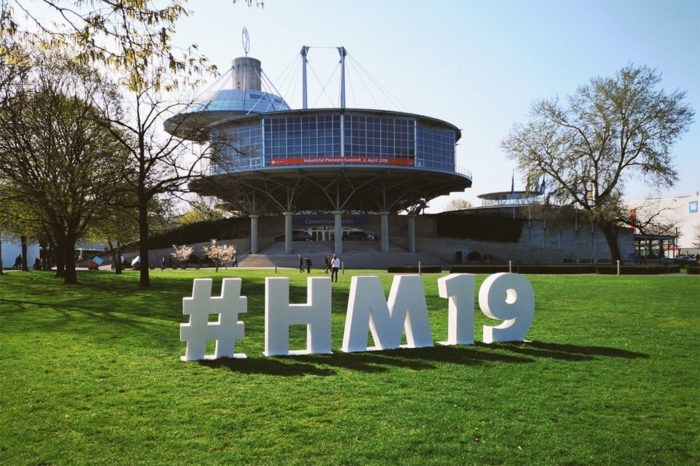
I was at Hannover Messe 2026 this week – and I came home with a clear impression: this trade show is changing. Not loudly, not dramatically, but noticeably. Here is what I saw.
Key Takeaways
- AI and humanoid robots dominated Hannover Messe 2026 (April 20–24, motto: “Think Tech Forward”) – IoT has all but disappeared as a standalone buzzword at the stands.
- The show is shrinking deliberately – smaller stands, wider aisles, more substance over spectacle – drawing a clear lesson from the demise of CeBIT.
- Research institutes such as DFKI and Forschungszentrum Jülich are significantly more visible, and VDI is bringing students from across Germany onto the fairgrounds – the show is clearly thinking about its future.
Getting there – despite the strike
Let’s start with what everyone in Hannover was talking about this week: the public transport strike. The ver.di union had called a warning strike for Monday and Tuesday, April 20 and 21, targeting local public transit. All tram lines, numerous bus routes – completely suspended. Right at the opening of the world’s largest industrial trade show, with tens of thousands of international visitors making their way to Hannover.
Deutsche Messe AG responded, organised shuttle buses, sent out emails. It helped – but the outcome was still clear: the first two days were very thin on visitors. From Wednesday onwards it got noticeably busier, and the feel of a proper industrial trade show returned.
IoT is no longer on the sign
This is what really struck me, and I found it remarkable: IoT – the Internet of Things, the networking of machines, sensors and devices via the internet – was no longer THE hyped topic. How rarely IoT still appeared as a headline at the stands was genuinely striking.
That doesn’t mean the technology has gone away. Quite the opposite. Sensors, connectivity, data processing directly at the device – it was embedded in everything on display. But it no longer needs its own banner. IoT has become infrastructure. Taken for granted. Invisible. And that is actually a sign of maturity – even if it makes for an interesting observation for a publication like WeSpeakIoT.
AI? Anyone wanting to visit every exhibitor covering it will still be at it come autumn
The dominant topic was clearly artificial intelligence. Everywhere. At practically every other stand. Anyone wanting to visit every exhibitor featuring AI as their theme would still be working through them come autumn.
But – and this is the crucial point – it was a different kind of AI than in previous years. Show director Jochen Köckler opened with a single mantra: “Application, application, application.” AI is no longer talking about itself. It is working. Siemens showed a shoe production line in Hall 27 where a humanoid robot and an autonomous packing robot were doing their jobs independently – not a demonstrator, but a live system. SEW-Eurodrive presented a “startup agent” that lets you configure machines through natural conversation, without classical AI language models – a deliberately European, sovereign solution.
The selfie with the robot
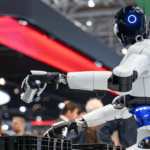
The photo opportunity of the show? A selfie with a humanoid robot. And there were plenty of chances. Around 15 companies presented production-ready humanoid systems – robots in human form, developed for industrial tasks. Agile Robots made its debut in Hall 27 with its “Agile One” model, 174 centimetres tall, on a specially designed catwalk. When no humanoid robot was within reach, there was always a “robot dog” – a four-legged autonomous system built for inspection tasks.
What caught my attention: classical production robots – the stationary industrial robots for welding, assembly and painting – felt almost underrepresented. The spotlight was on the mobile, the new, the human-like.
Less show, more substance
My feeling: this show has grown up. Less spectacle than before. Does anyone still remember robots moving their arms to the beat of music, with an Audi A3 attached? That was pure theatre. What I saw this time was different: more measured, more focused, with greater depth.
One example that stood out: the Zeiss stand. Quiet rather than loud marketing. Clear messages. Exhibits that were genuinely impressive – without any fanfare. That convinced me more than many a more elaborate presentation.
And the stands have got smaller. Even the big players. But the aisles are wider. You can breathe again.
Research is moving to the front
Something I really noticed: German research institutes have grown in number and presence. In the past, publicly funded research on the fairgrounds meant essentially just Fraunhofer. Now there is considerably more. Forschungszentrum Jülich showed projects on AI, high-performance computing and sustainable energy systems in Hall 11. DFKI (German Research Centre for Artificial Intelligence) had twelve exhibits, including robots that carry no intelligence of their own but connect to the surrounding infrastructure via 6G – a next-generation mobile communications standard still being rolled out. This is not a showroom concept. This is technology transfer.
The conversations were good – despite everything
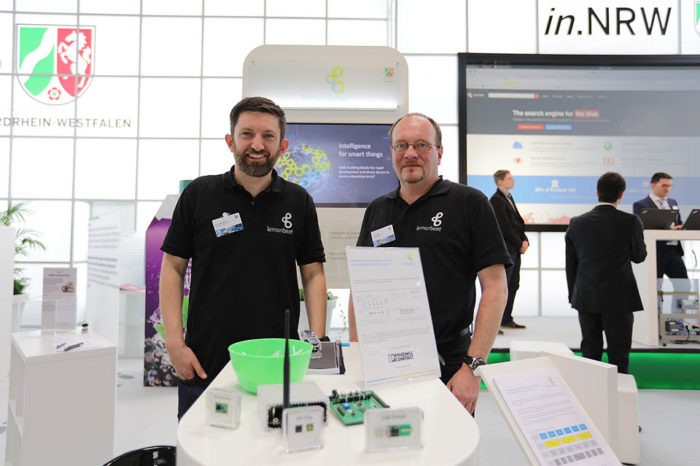
This may be anecdotal evidence, but I found it remarkable: I spoke with many exhibitors at this show. Just one gave a mediocre assessment. All the others – and this was already on Monday and Tuesday, with low visitor numbers and strike chaos – reported very good conversations. They were already satisfied with their results at that early stage.
That tells me: Hannover Messe has got smaller, but those who come, come with real questions. The quality of contacts is rising, even as the quantity of visitors falls. That is not a bad sign.
A show that has learned its lesson from CeBIT
I thought about CeBIT a lot this week. It was once the world’s largest IT trade show – and was quietly discontinued in 2018. Too big, too unfocused, too little substance. Hannover Messe appears to have that firmly in mind. It is getting smaller, but it is not getting less focused. It is concentrating, sharpening its profile, investing in quality over floor space. This is not shrinking from weakness. It is a deliberate choice.
On the subject of format changes, I picked up something interesting at the show: the organisers are said to be considering cutting the event to four days – Monday to Thursday – while making the programme denser with more guided tours and targeted formats. Nothing officially confirmed yet, but the idea fits the picture: less volume, more focus.
Young people on the fairgrounds – finally taken seriously
One thing that genuinely pleased me: the show is making more of an effort to bring young people on board. VDI – the Association of German Engineers – invited students, and not just from Hannover and the surrounding area. That is different from what I have seen in previous years. The aim is clearly to get the next generation in contact with this world early – with real machines, real researchers, real products. Not a school trip to a museum, but a day at the centre of the industrial world. I think that is exactly right, and important.
What I’m taking home
My clients always ask me: what is really driving industry right now? After this week in Hannover, my answer is clear: AI that no longer talks, but acts. Robots that look like humans and will one day work alongside them. And a layer of sensors and connectivity so taken for granted that it no longer needs a name.
Anyone still marketing IoT as a topic of the future will have noticed in Hannover 2026: the future is already here. It just goes by a different name.
You may also like