Rebellion of the Vacuum-Robots: How Cloud Enforcement Undermines Consumer Rights
 Dennis Knake
Posted On 26th October 2025
Dennis Knake
Posted On 26th October 2025
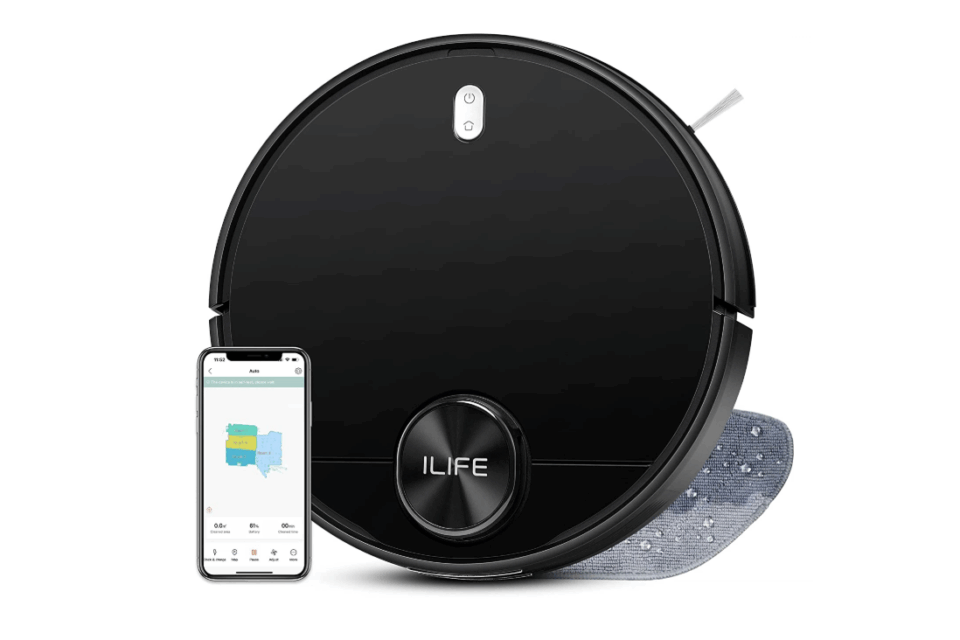
Software developer and blogger Harishankar Narayanan describes on his tech blog CodeTiger an incident that exemplifies the loss of control many users experience over their own devices. His smart vacuum cleaner, the iLife A11, suddenly stopped working—after he blocked its data transmissions to the manufacturer. The case exposes how deeply manufacturers of cloud-based devices can interfere with the autonomy of their customers.
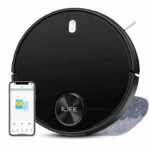
Harishankar purchased the iLife A11, a standard robot vacuum from China. Out of curiosity, he analyzed the device’s network traffic and discovered that the robot continuously sent data packets to servers operated by the manufacturer in China—including logs, telemetry data, and status reports. This occurred without any apparent necessity and without explicit user consent.
He then used his router to block the IP address responsible for this telemetry traffic, while leaving firmware updates and app access untouched. Initially, the robot worked flawlessly. A short time later, however, it became unusable.
The repair marathon
The blogger sent the device back to the manufacturer iLife several times. Each time he received it with the message “everything is fine,” and each time the same problem reappeared shortly afterward, once the robot was again operating behind his firewall. This pattern repeated itself multiple times. For Harishankar, this proved that the hardware itself was functional but software-dependent on a constant connection to the manufacturer’s cloud. Without this “communication home,” the robot simply stopped operating.
Technical analysis with striking findings
After the unsuccessful repairs, Harishankar opened the robot and examined its software. Inside, he found a Linux system (“TinaLinux”) running on an AllWinner A33 processor combined with a microcontroller managing motors and sensors. Notably, there was an open root access via ADB (Android Debug Bridge)—with no password protection.
He also found a service named “rtty”, apparently allowing remote access by the manufacturer. In the log files, Harishankar discovered an entry that matched the exact time of the first total failure:
“2024/02/29, 14:06:55.852622 [LogKimbo][CAppSystemState] Handle message! cmd_id 501 RS_CTRL_REMOTE_EVENT, len 8 serialno 0”
According to the author, this log entry may indicate a remote command that deliberately deactivated the robot. When he later tried reconnecting the robot to the cloud server, it briefly worked—until the firewall again blocked communication. From then on, the device remained permanently inoperative.
Cloud dependency instead of ownership
This case demonstrates how strongly modern IoT (Internet of Things) devices depend on cloud connectivity. Formally, the buyer owns the hardware. In practice, the manufacturer controls its functionality and lifespan.
Devices like the iLife A11 collect detailed usage and environmental data—such as room maps and movement patterns. These are typically transmitted to the manufacturer’s servers. When this transfer is blocked, the manufacturer can activate authentication or lockout mechanisms that limit or disable operation. Such scenarios are often only indirectly mentioned in the terms of service.
Power imbalance between user and manufacturer
Harishankar’s case highlights a structural imbalance between users and providers: consumers pay for hardware that only works under the manufacturer’s conditions. Once a customer takes data protection seriously and blocks communication channels, the other side can respond—up to and including deactivation.
Technically, this is possible through remote management functions, firmware authentication, and cloud-based device certificates. As a result, control over physical property increasingly shifts into digital infrastructures owned by the manufacturer.
Consequences for trust and brand image
For manufacturer iLife, the incident represents a reputational issue. Even if no deliberate shutdown can be proven, the mere suspicion of a remote lockout undermines customer trust. Consumers expect reliability and transparency—not dependence on a remote server’s goodwill.
The case recalls the debate around the “Right to Repair” and digital ownership: who truly owns a device if the manufacturer can disable it remotely? Brands that rely on cloud enforcement as a business model risk both reputational damage and legal scrutiny—particularly under data protection frameworks such as the EU General Data Protection Regulation (GDPR).
What customers can learn
- Offline functionality: Whenever possible, choose devices that remain fully usable without a cloud connection.
- Transparent privacy options: Regularly check apps and devices for hidden data transfers.
- Manual update control: Disable automatic firmware updates and approve them only after review.
- Prefer open standards: Manufacturers that support local APIs or open-source components offer greater control.
- Read warranty terms: Many vendors exclude warranty coverage if network connections are blocked.
Harishankar’s experience exemplifies how cloud dependency undermines consumer rights. Smart devices offer convenience—but they shift power from buyer to manufacturer. Anyone enforcing privacy may risk losing functionality.
In the long term, the notion of digital ownership must be re-examined: ownership without control is not real ownership. For manufacturers, trust becomes the key currency—and for consumers, the only effective protection.
Summary (tl;dr)
- Blogger Harishankar blocks telemetry connections of his iLife vacuum cleaner.
- The device repeatedly stops working.
- Only after several repairs by the manufacturer does it briefly function again—until the next block.
- Analysis reveals remote access and cloud dependency.
- The case illustrates how manufacturers use cloud control to exercise power over customers and devices.