
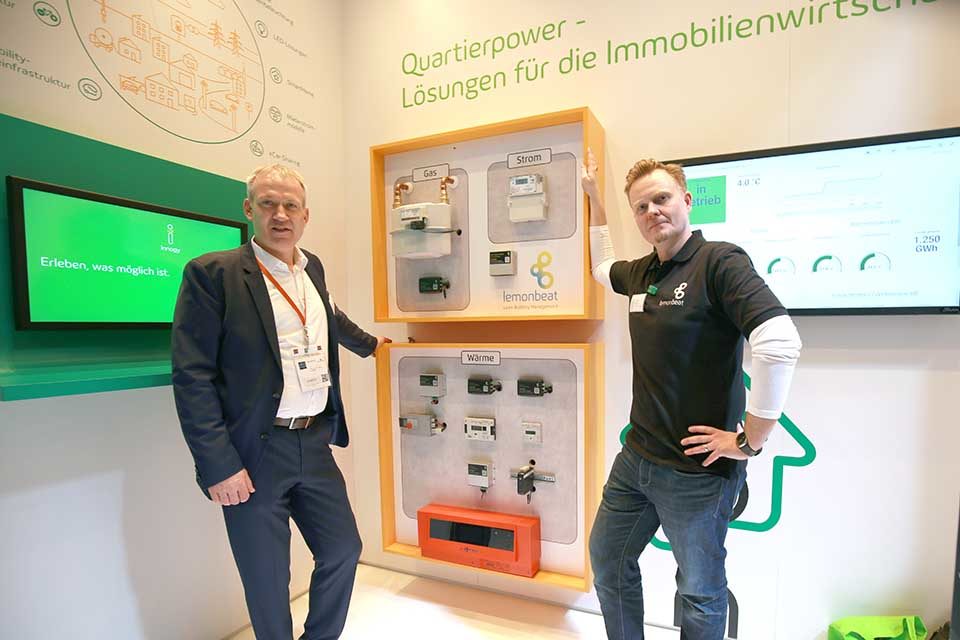
From 11th to 13th February this year experts of the European energy industry will meet for the 20th time at the E-World energy & water in Essen. This time topics such as cyber security or hydrogen are at the top […]
1
Whether it’s a trade fair, conference, exhibition, or maker event, here you can find out everything you need to know about events related to the Internet of Things (IoT).
From 11th to 13th February this year experts of the European energy industry will meet for the 20th time at the E-World energy & water in Essen. This time topics such as cyber security or hydrogen are at the top […]
IoT zum Anfassen: Zum dritten mal in Folge treffen sich Entwickler, Forscher, Gründer oder Anwender zum IoTcamp. Nach Düsseldorf und München geht es in diesem Jahr zum Austausch und Netzwerken nach Berlin.
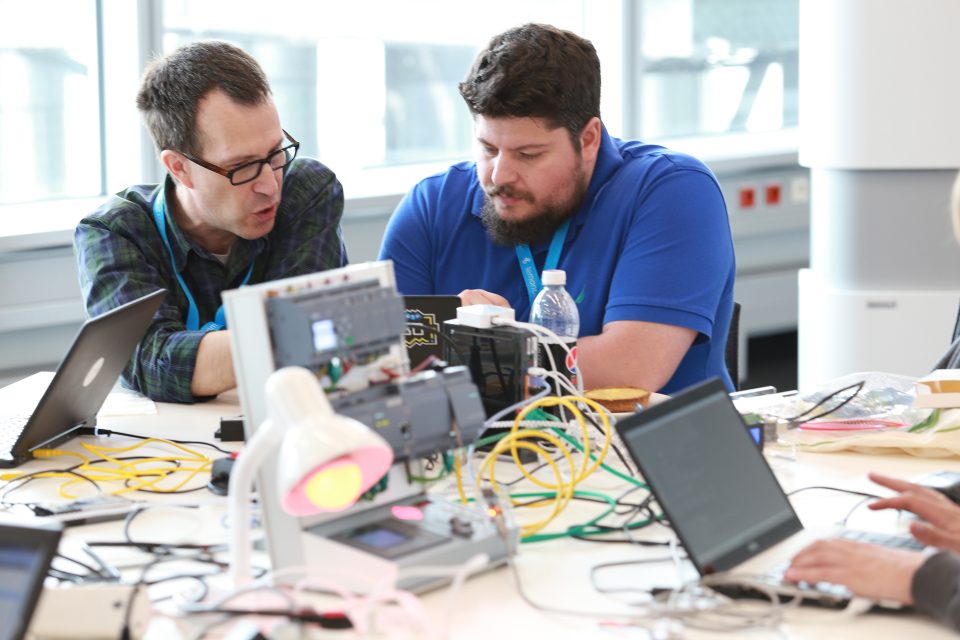
With new ideas, new technologies and new smart products emerging every year, one big challenge for devices in the Internet of Things remains: How can we make them understand each other? A huge number of manufacturers and products using different protocols plus a wide range of platforms with non-interoperable networking technologies are making the IoT too complicated to handle.
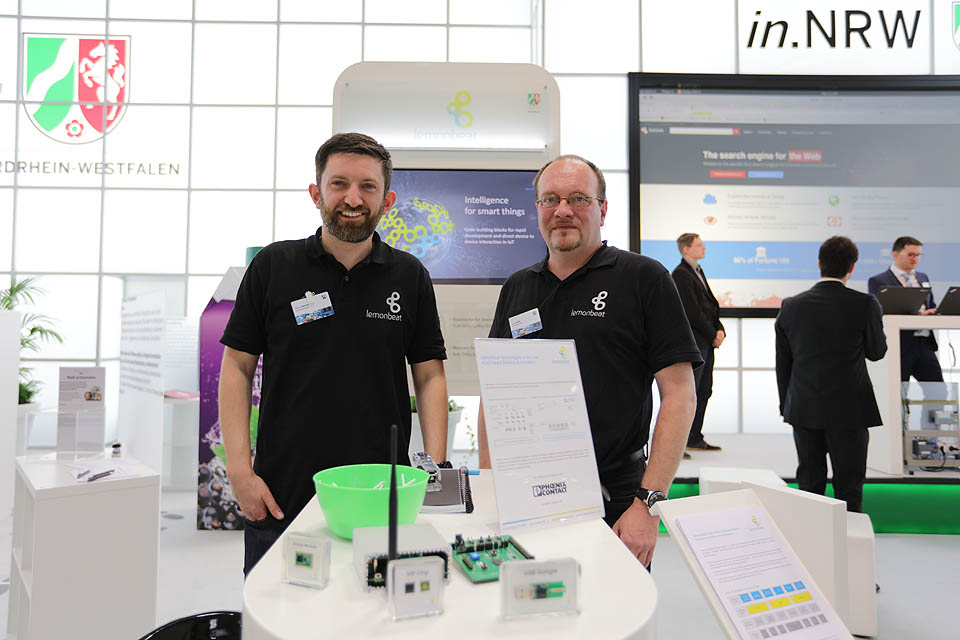
The focus of this year’s Hannover Messe was on Industrial Internet of Things services and products. With over 6,500 exhibitors and more than 225,000 visitors it is the world’s largest industry fair. And with IoT being a main topic, our appearance was obligatory. Lemonbeat’s technology offers a flexible framework to quickly enable the “IoT-zation” of all kind of things: from sensors and actuators to products and machines for consumer and professional needs. Already in use in the field of Smart Home, Smart Building, Smart Energy and Smart Garden systems, Lemonbeat’s range of use is vast.
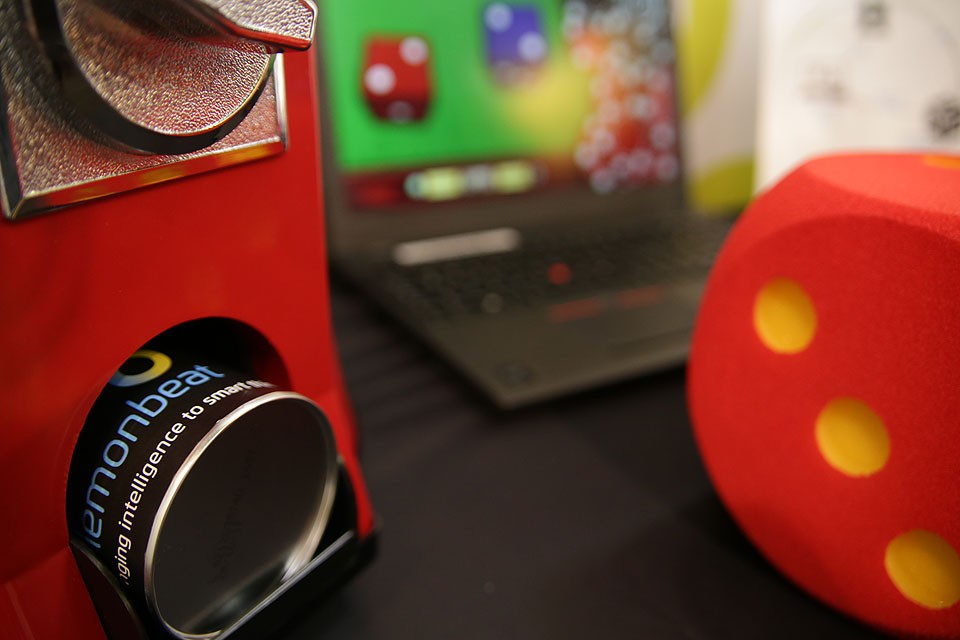
Let’s face it: Explaining the Internet of Things and the advantages of direct communication between devices can be a dry and theoretical topic. So we decided to literally spice the whole story up and add a little bit of gamification to the issue: In future events we’re going to demonstrate our technology with a smart game of dice that communicates its result to a vending machine, releasing a pack of Lemonbeat branded snack chips in case players sucessfully rolled the dice.
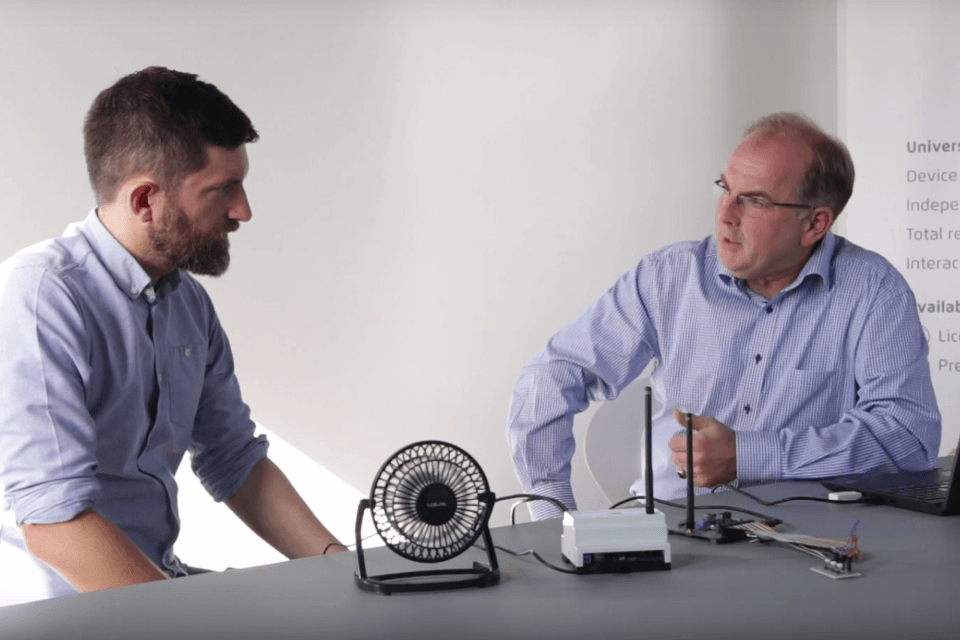
One big challenge in the world of IoT will be to ensure devices from a range of different vendors to collaborate smoothly. One solution, and one that has proven the most popular up until now, is to connect each single device with a cloud service, collect the data and let a remote computer decide what to do next. But this is not always a very elegant way of doing things. First of all, you may need to tie in a number of gateways to collect data from the different devices which may all use different protocols. Secondly, by sending everything into the cloud first, you run the risk of higher latency. Thirdly, if the cloud server stops working or a glitch with the internet connection, the whole system may grind to a halt.
Whenever you attend IoT events these days, there’s one question that is always debated intensively. Do we really need a common standard for the Internet of Things, or are we fine with what we have? While some say we have already got what we need and the rest can be done with gateways, others passionately advocate for horizontal standardization. At the annual M2M Summit of the German based M2M Alliance in Düsseldorf, the discussion continued.

The Internet of Things, with all its players in the market, faces the same problem that the Internet faced before the days of the World Wide Web: A wide range of platforms with non-interoperable networking technologies, data silos and therefore limited interoperability, and thus, market potential. Perhaps if parallels can be drawn, maybe learnings can be too?